
The quest for sustained satiety is as ancient as humanity itself. From our hunter-gatherer ancestors meticulously seeking calorie-dense foods to the modern individual navigating a landscape of hyper-palatable, nutrient-poor options, the desire to feel full, satisfied, and free from the relentless drumbeat of cravings remains a universal human experience. In a world awash with fleeting dietary fads and complex nutritional theories, sometimes the most profound answers lie hidden in plain sight, nestled within the humble, time-honored staples of our culinary heritage.
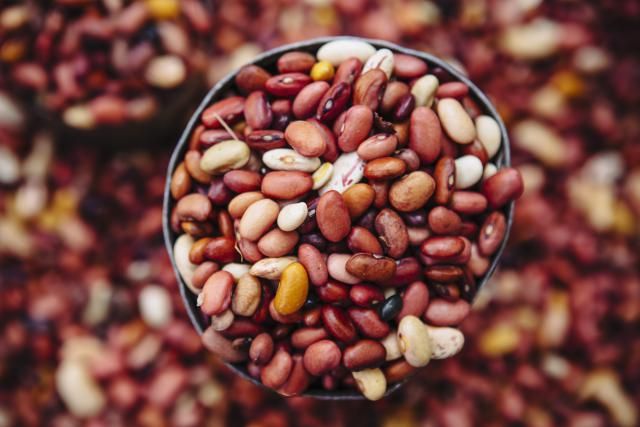
Enter the red bean.
Often relegated to the supporting role in hearty stews, chili, or the quintessential Monday Red Beans and Rice, this unassuming legume harbors a secret weapon: resistant starch. Far from being a mere dietary fiber, resistant starch (RS) is a powerful, multifaceted compound that orchestrates a symphony of metabolic and microbial responses within our bodies, ultimately leading to a profound and sustainable sense of fullness that actively crushes cravings. For the knowledgeable audience, those who delve beyond the headlines and seek to understand the intricate mechanisms underpinning our physiology, the story of the red bean and its resistant starch is a fascinating journey into the very core of gut health, metabolic regulation, and the intricate dance between our food and our deepest desires.
The Unsung Hero: Red Beans Through Time and Culture
Before we dissect the molecular marvels of resistant starch, let us first pay homage to the red bean itself. A member of the common bean species (Phaseolus vulgaris), red beans boast a lineage stretching back thousands of years to the Americas, where they were a cornerstone of indigenous diets. From the ancient civilizations of Mesoamerica, where beans were cultivated alongside maize and squash, to their eventual journey across continents with explorers and traders, red beans have nourished populations with their robust flavor and remarkable nutritional density.
In the Southern United States, particularly Louisiana, the red bean holds almost mythical status. Monday was traditionally laundry day, and a pot of red beans could simmer slowly all day, requiring minimal attention while providing a nourishing, economical meal at day’s end. This cultural embrace speaks volumes about its practicality and staying power. Similarly, across the Caribbean, Latin America, and parts of Africa and Asia, red beans feature prominently in traditional dishes – from Cuban frijoles colorados to Indian rajma – testifying to their global reach and adaptability.
Beyond their cultural significance, red beans are nutritional powerhouses. They are rich in plant-based protein, essential minerals like iron, magnesium, and potassium, and a plethora of B vitamins. Crucially, they are an excellent source of dietary fiber, both soluble and insoluble. But it is within the intricate carbohydrate matrix of the red bean that resistant starch truly shines, distinguishing it from many other fiber sources and elevating its status in the battle against incessant cravings.
Unpacking the "Resistant Starch" Enigma: What It Is and Why It Matters
To understand how resistant starch in red beans crushes cravings, we must first understand its unique nature. As its name suggests, resistant starch is a type of starch that "resists" digestion in the small intestine. Unlike digestible starches, which are rapidly broken down into glucose by enzymes and absorbed into the bloodstream, RS remains largely intact, bypassing the small intestine and journeying onward to the large intestine, or colon. This journey is where the magic truly begins.
There are several types of resistant starch, each with slightly different properties and sources:
- RS1 (Physically Inaccessible Starch): Found in whole or partially milled grains, seeds, and legumes. The starch granules are encased within a fibrous matrix, making them inaccessible to digestive enzymes.
- RS2 (Native Granular Starch): Occurs naturally in raw potatoes, green bananas, and high-amylose corn. Its tightly packed crystalline structure prevents enzymatic digestion.
- RS3 (Retrograded Starch): This is the type most relevant to cooked red beans. It forms when starchy foods are cooked and then cooled. The cooking process gelatinizes the starch, but upon cooling, the starch molecules (specifically amylose) re-associate into a more crystalline, resistant structure. Reheating can diminish some RS3, but a significant portion often remains.
- RS4 (Chemically Modified Starch): Industrially modified starches used in processed foods.
- RS5 (Amylose-Lipid Complex): Formed when amylose complexes with lipids, making it more resistant to digestion.
When we cook red beans, the heat breaks down the cell walls and gelatinizes the starch. However, as these beans cool, a significant portion of their starch undergoes retrogradation, transforming into RS3. This means that a bowl of leftover Red Beans and Rice, reheated the next day, might actually contain more resistant starch than when it was first cooked, offering an even greater metabolic advantage. This seemingly simple phenomenon is a profound example of how food preparation can subtly yet significantly alter the nutritional profile and functional benefits of what we eat.
The Gut’s Inner Alchemist: Fermentation and SCFAs
The journey of resistant starch to the large intestine is not an end, but a beginning. Our colon is a bustling metropolis of trillions of microorganisms – bacteria, archaea, fungi, and viruses – collectively known as the gut microbiome. While often associated with digestion, the microbiome is a critical player in virtually every aspect of our health, from immunity and mood to nutrient synthesis and metabolic regulation.
When resistant starch arrives in the colon, it becomes a feast for specific beneficial bacteria, particularly those belonging to the Bacteroidetes and Firmicutes phyla. These bacteria possess the enzymatic machinery to break down and ferment RS, a process that yields a treasure trove of compounds known as Short-Chain Fatty Acids (SCFAs). The three most abundant and well-studied SCFAs are acetate, propionate, and butyrate.
Each SCFA plays a distinct and vital role:
-
Butyrate: Often considered the superstar of SCFAs, butyrate is the primary fuel source for the colonocytes, the cells lining the colon. It is crucial for maintaining the integrity of the gut barrier, preventing "leaky gut" syndrome, and reducing inflammation in the gut. Butyrate also exhibits potent anti-cancer properties, particularly against colorectal cancer, by promoting healthy cell differentiation and apoptosis (programmed cell death) in cancerous cells. Its presence is a strong indicator of a healthy, thriving gut ecosystem.
-
Propionate: Absorbed into the bloodstream, propionate travels to the liver, where it plays a key role in gluconeogenesis (the production of glucose from non-carbohydrate sources). This process can help stabilize blood sugar levels. More importantly for our discussion on cravings, propionate has been shown to signal satiety to the brain, partly through its interaction with the gut-brain axis and the release of appetite-regulating hormones.