Metabolism & Macro-Magic: A Deep Dive into Red Bean Nutrition – The Unsung Powerhouse of Sustained Vitality

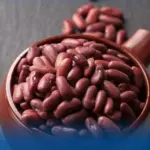
In the grand theatre of life, where every breath is a beat and every thought a spark, the silent, intricate dance of metabolism plays the most pivotal role. It is the invisible conductor of our existence, dictating the tempo of our energy, the rhythm of our growth, and the symphony of our well-being. For the discerning mind, understanding metabolism is not merely an academic exercise; it is an unlocking of profound wisdom, a key to optimizing our vitality. And within this complex narrative, amidst the cacophony of modern dietary trends and superfood claims, a humble, crimson jewel often goes overlooked: the red bean, specifically the Azuki or Adzuki bean.
This is not merely a tale of a legume; it is a story of ancient wisdom meeting modern science, a journey into how a seemingly simple food can embody the very essence of metabolic magic. For the knowledgeable audience, we shall embark on an exhaustive exploration, dissecting the fundamental principles of metabolism before revealing how the red bean, with its unique blend of macronutrients and micronutrients, stands as an unsung powerhouse, profoundly impacting our energy, our health, and our very longevity. It is a testament to the fact that true nutritional power often resides not in the exotic, but in the enduring, time-tested staples that have nourished civilizations for millennia.
I. Deconstructing Metabolism: The Grand Orchestration of Energy
At its core, metabolism is the sum of all chemical processes that occur in an organism to maintain life. It is an exquisitely balanced system of construction and deconstruction, energy capture and energy release, ceaselessly working to keep us alive, growing, and thriving.
A. Anabolism vs. Catabolism: The Fundamental Principles
Imagine a bustling construction site and a meticulous demolition crew working in tandem. This analogy perfectly illustrates the two primary metabolic pathways:
- Catabolism: This is the "demolition crew" of metabolism. It involves the breakdown of complex molecules into simpler ones, releasing energy in the process. When you eat food, your body catabolizes carbohydrates into glucose, fats into fatty acids and glycerol, and proteins into amino acids. This energy, primarily in the form of adenosine triphosphate (ATP), is then used to fuel cellular activities. Think of it as burning fuel to power an engine. Key catabolic processes include glycolysis, the Krebs cycle, and beta-oxidation.
- Anabolism: This is the "construction site" where energy is consumed to build complex molecules from simpler ones. It’s about growth, repair, and storage. Your body uses the amino acids from catabolized protein to synthesize new muscle tissue, enzymes, and hormones. It uses glucose to build glycogen stores in the liver and muscles, and fatty acids to construct cell membranes or store as adipose tissue. Anabolism is energy-intensive and essential for growth, maintenance, and adaptation.
These two processes are inextricably linked and constantly at play, maintaining a delicate equilibrium that defines our metabolic state.
B. Basal Metabolic Rate (BMR) and Total Daily Energy Expenditure (TDEE)
To truly grasp our energy needs, we must understand two critical metrics:
- Basal Metabolic Rate (BMR): This is the minimum amount of energy your body needs to perform essential, life-sustaining functions at rest, such as breathing, circulation, cell production, nutrient processing, and temperature regulation. It’s the energy required just to exist. Factors influencing BMR include:
- Age: BMR generally decreases with age.
- Sex: Men typically have higher BMRs due to greater muscle mass.
- Body Composition: Muscle tissue is metabolically more active than fat tissue, so individuals with more muscle have higher BMRs.
- Genetics: Individual genetic predispositions play a significant role.
- Hormones: Thyroid hormones, for instance, are powerful regulators of BMR.
- Climate: Living in colder climates can slightly increase BMR to maintain body temperature.
- Total Daily Energy Expenditure (TDEE): This represents the total number of calories your body burns in a 24-hour period. It encompasses:
- BMR: ~60-75% of TDEE.
- Thermic Effect of Food (TEF): The energy expended to digest, absorb, transport, metabolize, and store food. This accounts for ~10% of TDEE and varies significantly by macronutrient (protein has the highest TEF).
- Activity Energy Expenditure (AEE): The energy expended through physical activity, both structured exercise (Exercise Activity Thermogenesis, EAT) and non-exercise activity (Non-Exercise Activity Thermogenesis, NEAT), such as fidgeting, standing, walking, and daily chores. This is the most variable component of TDEE.