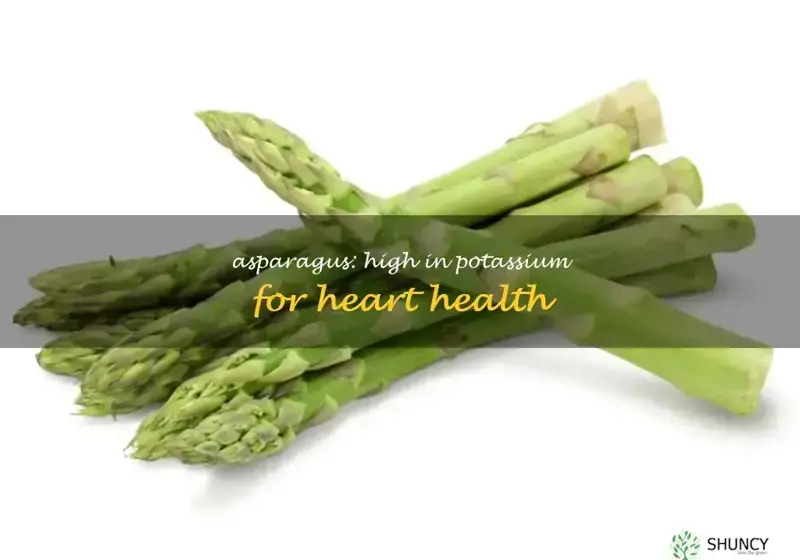
The Emerald Spear: A Tale of Asparagus, Heart Health, and the Unseen Architects – Folate and Potassium

The story of food, at its heart, is a narrative of sustenance, culture, and discovery. From the earliest forays into foraging to the intricate dance of modern nutritional science, humanity has relentlessly sought to understand the profound relationship between what we consume and the vitality of our being. Among the myriad edible treasures nature bestows upon us, few possess the quiet elegance and profound nutritional punch of Asparagus officinalis. More than just a harbinger of spring or a culinary delicacy, the humble asparagus spear holds within its verdant stalk a complex symphony of compounds, two of which – folate and potassium – play starring roles in a compelling narrative of cardiovascular guardianship.
This is not merely an exposition of nutrients; it is a journey. It is a story that begins in the ancient world, traverses the tables of emperors and commoners alike, and ultimately plungands into the microscopic marvels of cellular biochemistry, revealing how a seemingly simple vegetable contributes to the intricate, life-sustaining rhythm of the human heart. For the knowledgeable audience, we shall peel back the layers, moving beyond superficial claims to explore the mechanisms, the historical context, and the nuanced understanding of how asparagus, through its rich endowment of folate and potassium, stands as a silent, yet potent, ally in the quest for optimal heart health.
Part I: The Ascent of the Spear – A Historical Overture
Our tale begins not in a laboratory, but in the sun-drenched lands surrounding the Mediterranean Sea, where wild asparagus has flourished for millennia. Its presence in human diets dates back at least 2,000 years, with evidence of its cultivation and consumption found in ancient Egypt, Greece, and Rome. The Egyptians depicted it on their friezes, recognizing its slender beauty and likely its subtle benefits. The Greeks, ever curious about the natural world, gave it the name "asparagos," meaning "sprout" or "shoot," and valued it for both its taste and its purported medicinal properties, though these were often steeped in folklore rather than empirical evidence.
It was the Romans, however, who truly elevated asparagus to an esteemed status. Their sophisticated agricultural techniques allowed for its widespread cultivation, and it became a prized ingredient in imperial banquets. The celebrated Roman gourmet Apicius, in his De Re Coquinaria, provided detailed recipes for preparing asparagus, underscoring its importance in the Roman culinary landscape. Emperor Augustus, famed for his precision, reportedly coined the phrase "faster than cooking asparagus" to describe something needing to be done with great haste – a testament to its commonality and quick cooking time even then. Beyond its culinary appeal, Roman physicians like Pliny the Elder attributed various therapeutic qualities to it, ranging from diuretic effects to aphrodisiac properties – early whispers of its physiological impact, albeit through a less scientific lens.
As the Roman Empire waned, asparagus found refuge in monastic gardens throughout Europe, preserved by those who cherished its unique flavor and continued to believe in its healthful virtues. By the Middle Ages, it was being cultivated again with renewed vigor, spreading from France to England, and eventually across the Atlantic to the Americas with early European settlers. Its journey through history is one of quiet persistence, a testament to its enduring appeal and the intuitive understanding that certain foods were simply "good for you." This historical reverence sets the stage for our modern scientific inquiry, grounding our biochemical explorations in a tradition that long predates the isolation of folate or the quantification of potassium. The spear has always been cherished; now, we seek to understand precisely why.
Part II: Unveiling the Microscopic Maestros – Folate and the Homocysteine Hypothesis
From the grandeur of ancient banquets, our narrative shifts to the intricate world within our cells, a realm governed by enzymes, cofactors, and the relentless machinery of metabolism. Here, folate (Vitamin B9) emerges as a central character, a microscopic maestro conducting critical biochemical symphonies essential for life, and profoundly relevant to cardiovascular health.
The discovery of folate itself is a compelling tale of scientific pursuit. First identified in the 1930s and isolated from spinach leaves in 1941, its name derives from the Latin folium, meaning leaf, a nod to its abundance in leafy green vegetables. Initially recognized for its role in preventing megaloblastic anemia, a severe blood disorder, the understanding of folate’s broader physiological significance has expanded dramatically over the decades.
At the heart of folate’s cardiovascular role lies its intimate involvement in the one-carbon metabolism pathway, specifically the methionine cycle. This is where the story of folate and heart health truly intertwines with a compound called homocysteine.
Homocysteine is a sulfur-containing amino acid, a normal intermediate product of methionine metabolism. Methionine is an essential amino acid obtained from dietary protein. After methionine donates a methyl group for various cellular processes, it is converted into homocysteine. The critical juncture for heart health arises when homocysteine levels become elevated in the blood – a condition known as hyperhomocysteinemia.
For many years, epidemiological studies observed a consistent correlation between elevated plasma homocysteine levels and an increased risk of cardiovascular disease (CVD), including coronary artery disease, stroke, and peripheral vascular disease. This led to the formulation of the homocysteine hypothesis: that high homocysteine levels are an independent risk factor for CVD.
The proposed mechanism for homocysteine’s pathogenicity is multifaceted and insidious. Elevated homocysteine is thought to be directly toxic to the endothelial cells that line the interior of blood vessels. It can promote oxidative stress, impair nitric oxide bioavailability (leading to vasoconstriction), stimulate smooth muscle cell proliferation, and enhance platelet aggregation. In essence, high homocysteine can initiate a cascade of events that damage the delicate inner lining of arteries, making them more prone to plaque formation (atherosclerosis), inflammation, and thrombosis – the very hallmarks of heart disease.
This is where folate steps onto the stage as a crucial intervention. Folate, in its active coenzyme form (tetrahydrofolate, or THF), is indispensable for the enzyme methionine synthase. This enzyme, along with Vitamin B12, catalyzes the re-methylation of homocysteine back to methionine. It is a critical step in lowering homocysteine levels, effectively recycling it and preventing its accumulation. Without adequate folate, this pathway becomes inefficient, allowing homocysteine to build up and exert its damaging effects.
Asparagus is a nutritional powerhouse when it comes to folate. A single cup of cooked asparagus (approximately 180 grams) can provide well over 60% of the recommended daily allowance (RDA) for adults, making it one of the richest natural sources available. By regularly incorporating asparagus into the diet, individuals can significantly bolster their folate intake, thereby supporting the efficient conversion of homocysteine back to methionine and potentially mitigating its cardiovascular risks.
While the initial excitement around the homocysteine hypothesis suggested that folate supplementation alone could dramatically reduce CVD events, subsequent large-scale clinical trials have yielded a more nuanced picture. While folate does effectively lower homocysteine levels, the direct impact on reducing cardiovascular events has not been as dramatic as initially hoped in all populations, especially in those with adequate folate status to begin with. This complexity highlights that CVD is multifactorial, and while homocysteine is a risk factor, it is not the sole determinant. However, the consistent evidence that folate lowers homocysteine, coupled with its other vital roles in DNA synthesis and repair (which are also indirectly protective against various chronic diseases), firmly establishes its importance in a heart-healthy diet. For those with genetic variations that affect folate metabolism, such as polymorphisms in the MTHFR enzyme, adequate dietary folate (or its methylated form) becomes even more critical.
Thus, asparagus, brimming with folate, serves as a natural, delicious way to support this vital biochemical pathway, offering a foundational layer of protection against the subtle, yet pervasive, threat of hyperhomocysteinemia. It’s a testament to nature’s intricate design, providing us with the very tools needed to maintain our internal equilibrium.
Part III: The Electrolytic Guardian – Potassium and the Vascular Symphony
Our journey continues, revealing another indispensable nutrient within the emerald spear: potassium. While folate orchestrates a delicate biochemical conversion, potassium acts as an electrolytic guardian, playing a fundamental role in maintaining fluid balance, nerve signaling, and, critically, regulating blood pressure – a cornerstone of cardiovascular health.
Potassium is an essential mineral and one of the most abundant electrolytes in the human body. Its primary function, in concert with sodium, is to maintain the electrical potential across cell membranes, a process vital for nerve impulse transmission, muscle contraction (including the heart muscle), and fluid balance. But its role in blood pressure regulation is particularly profound and warrants a closer look.
High blood pressure, or hypertension, is a silent killer, a major risk factor for heart attack, stroke, kidney disease, and heart failure. The interplay between sodium and potassium is central to its etiology and management. In modern diets, particularly in Western societies, there is an often-unhealthy imbalance: excessive sodium intake coupled with insufficient potassium consumption.
Potassium directly counteracts the effects of sodium. When dietary sodium is high, it can lead to increased fluid retention, which in turn elevates blood volume and pressure. Potassium, particularly through its role in the sodium-potassium pump, helps to excrete excess sodium from the body via the kidneys. This renal mechanism is a primary way potassium helps to lower blood pressure. More potassium in the diet signals the kidneys to excrete more sodium and water, reducing the overall fluid volume within the circulatory system and thereby easing the pressure on arterial walls.
Beyond its sodium-balancing act, potassium also exerts a direct vasodilatory effect. It can help relax the smooth muscle cells in the walls of blood vessels, leading to wider arteries and reduced peripheral resistance. This direct relaxation further contributes to lower blood pressure, improving blood flow and reducing the workload on the heart.
Furthermore, potassium is critical for maintaining a regular heart rhythm. It plays a pivotal role in the electrical signals that coordinate the contraction and relaxation of the heart muscle. Imbalances in potassium levels (both too high and too low) can lead to arrhythmias, which can be life-threatening. By ensuring adequate potassium intake, we support the heart’s natural electrical stability.
Asparagus is a commendable source of potassium. A cup of cooked asparagus provides a significant amount of this vital mineral, contributing substantially to the recommended daily intake (RDI), which is typically around 4,700 mg for adults. Given that many individuals fall short of this recommendation, incorporating potassium-rich foods like asparagus becomes a simple yet impactful dietary strategy.
The scientific evidence supporting potassium’s role in blood pressure management is robust. Numerous epidemiological studies and clinical trials have demonstrated that higher potassium intake is associated with lower blood pressure and a reduced risk of stroke and other cardiovascular events. The DASH (Dietary Approaches to Stop Hypertension) diet, widely recommended for its blood pressure-lowering effects, emphasizes fruits, vegetables, and whole grains – foods naturally rich in potassium, alongside other beneficial compounds.
In essence, potassium acts as a vital counterweight to the pressures of modern life and diet. By diligently performing its electrolytic duties, it helps to keep our vascular system pliable, our blood pressure in check, and our heart beating with a steady, strong rhythm. Asparagus, with its generous potassium endowment, thus contributes a powerful chapter to the story of heart health, working in concert with folate to safeguard our most vital organ.
Part IV: Beyond Folate and Potassium – The Ensemble Cast
While folate and potassium are arguably the headline acts in asparagus’s cardiovascular narrative, the strength of any great story lies in its supporting characters. Asparagus is a nutrient-dense food, offering a diverse array of vitamins, minerals, and phytonutrients that synergistically contribute to overall health, including that of the heart. To view a food in isolation, focusing on only one or two compounds, would be to miss the rich tapestry of its full impact.