
The Quiet Desperation of Disconnect
In the grand tapestry of human relationships, where threads of love, companionship, and shared dreams intertwine, there often lies a delicate and sometimes frayed strand: sexual intimacy. For many couples, this thread, while vital, can become a source of profound unspoken tension, particularly when the rhythm of desire between two partners falls out of sync. This isn’t just about "sex" in its narrowest definition; it’s about the broader landscape of physical closeness, affection, validation, and connection that intertwines with our deepest sense of belonging and desirability.
Mismatched libidos, a phrase that often carries a heavy weight of shame and inadequacy, is not merely a common occurrence – it is, in many ways, the norm. The idea of two individuals perfectly aligned in their sexual appetite throughout the entirety of a long-term relationship is more fantasy than reality. Life, with its relentless currents of stress, fatigue, illness, children, career demands, and the simple ebb and flow of individual experience, ensures that desire rarely remains a static, synchronized force.
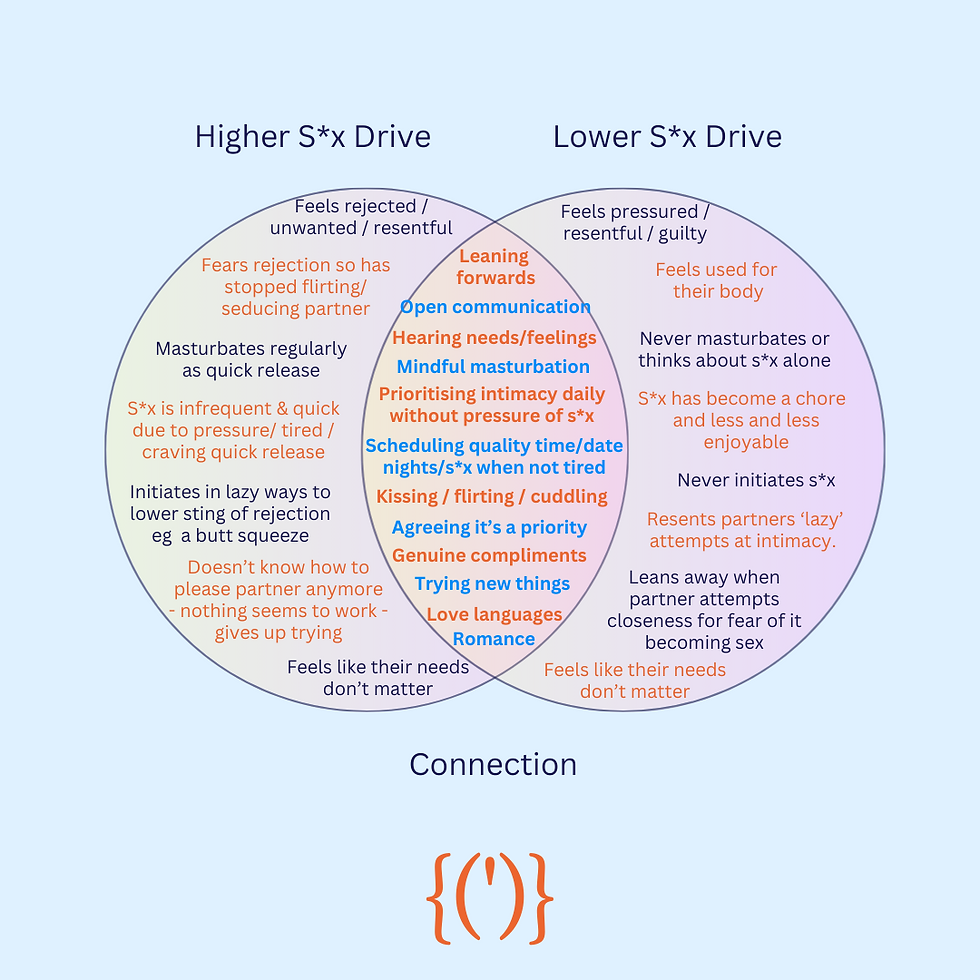
The story of mismatched libidos is often a silent one, told through missed cues, averted gazes, quiet nights, and a growing chasm of emotional distance. It’s the story of one partner feeling perpetually rejected, their longing misinterpreted as a demand, their vulnerability met with a gentle but firm "not tonight." It’s also the story of the other partner, burdened by guilt and the crushing weight of expectation, feeling their body is no longer their own, but a site of potential obligation, their desire stifled by the very pressure to perform. In this narrative, intimacy, once a source of joy and connection, morphs into a battlefield of resentment, misunderstanding, and emotional withdrawal.
This article aims to tell that story, not as a tragedy, but as a journey of understanding and transformation. It’s a guide for navigating the complex terrain of desire discrepancies, not by forcing alignment, but by cultivating a shared space where both partners feel seen, heard, and cherished, where intimacy is redefined, and where connection triumphs over pressure. The goal is to find a middle ground without sacrificing authenticity, without resorting to obligation, and without allowing the silent desperation to fester into irreparable damage.
Understanding the Landscape: The Nuances of Desire
Before we can find a middle ground, we must first understand the terrain we’re traversing. Desire, or libido, is far more complex than a simple "on/off" switch. It’s a multifaceted phenomenon influenced by a confluence of biological, psychological, emotional, and relational factors.
What is "Libido" Anyway? Beyond Just Sex Drive
The term "libido" is often reductively equated with a raw, primal sex drive. While it certainly encompasses that, a more comprehensive understanding reveals its broader scope. Libido is our general life force, our drive for pleasure, connection, and vitality, of which sexual desire is a significant, but not exclusive, component. It’s influenced by:
- Biological Factors: Hormones (testosterone, estrogen, progesterone, oxytocin), neurotransmitters (dopamine, serotonin), overall health, chronic illness, medication side effects (antidepressants, birth control), fatigue, age.
- Psychological Factors: Stress, anxiety, depression, past trauma, body image issues, self-esteem, grief, mental health conditions. Our minds are our largest sexual organs, and what happens there profoundly impacts our bodies.
- Emotional Factors: Feelings of love, connection, safety, trust, resentment, anger, vulnerability, emotional intimacy.
- Relational Factors: Communication patterns, power dynamics, unresolved conflict, perceived equity in the relationship, the quality of non-sexual interactions.
- Lifestyle Factors: Work-life balance, parenting demands, sleep deprivation, diet, exercise.
The Myth of the "Perfect Match": Why Mismatched Libidos are the Norm
The pervasive cultural narrative, often fueled by romantic comedies and unrealistic portrayals of sex, suggests that truly compatible partners will naturally have synchronized libidos. This myth sets an impossibly high bar, leading couples to believe that a discrepancy in desire is a sign of fundamental incompatibility or a dying relationship. In reality, given the myriad factors influencing desire, it is far more common for partners to experience fluctuating and often differing levels of sexual interest over time. Recognizing this is the first step in de-pathologizing the issue and reframing it as a shared challenge rather than an individual failing.
Sources of Mismatch: Unpacking the "Why"
Understanding the roots of a desire discrepancy is crucial for effective problem-solving. It’s rarely malicious or a deliberate withholding of affection.
- Spontaneous vs. Responsive Desire: This is a critical distinction.
- Spontaneous desire is the "I feel horny now" impulse, often arising seemingly out of nowhere. It’s what most people envision when they think of "sex drive."
- Responsive desire is desire that arises in response to arousal, touch, or a particular situation. Many individuals, especially women, experience desire responsively. They might not feel "horny" beforehand but become aroused and desire sex once physical intimacy begins. The higher-desire partner often operates from a place of spontaneous desire, while the lower-desire partner might be more responsive. Misunderstanding this difference can lead to frustration and misinterpretation.
- Life Stages and Stressors: The libido of a couple in their twenties, pre-children, with ample free time, will likely differ from that of parents of young children, or a couple navigating mid-life changes, menopause, or career burnout.
- Emotional Disconnect: Resentment, unresolved conflicts, or a general lack of emotional intimacy outside the bedroom can be a significant libido killer. If a partner feels unheard, undervalued, or emotionally distant, physical intimacy often becomes the first casualty.
- Physical and Mental Health: Depression, anxiety, chronic pain, thyroid issues, diabetes, heart conditions, and various medications can all significantly dampen desire. It’s essential not to overlook these physiological underpinnings.