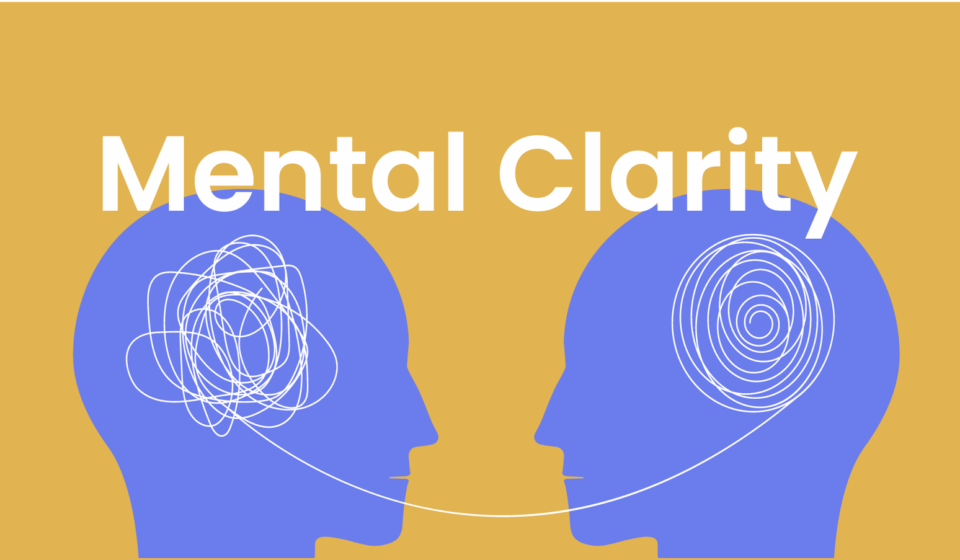

The digital age, with its relentless cascade of information, its siren call of notifications, and its ever-present hum of connectivity, has woven a tapestry of unprecedented convenience. Yet, beneath its shimmering threads, an insidious undertone resonates: a collective anxiety, a pervasive mental fog, a profound disconnect from the innate rhythms that once anchored humanity. In this cacophony, where the mind is perpetually barraged, many seek refuge, a sanctuary not built of bricks and mortar, but of something far more ancient, more elemental: water.
This is the story of Silent Synergy, an exploration into the profound, often overlooked, power of water to restore, to clarify, and to heal. It is a narrative woven from the universal yearning for peace, illuminated by scientific inquiry, and deepened by the timeless wisdom of immersion. For in the gentle lapping of waves, the insistent rush of a river, or the quiet descent of rain, there exists a rhythm – a primordial beat – that can recalibrate the human spirit and unlock a profound mental clarity.
The Drowning in the Digital Tide: Eleanor’s Beginning
Eleanor’s life, by all external measures, was a triumph. A project manager in a bustling tech firm, she navigated complex deadlines, managed diverse teams, and commanded respect. Her apartment, high above the city, offered panoramic views of a skyline that never slept. Yet, inside, Eleanor was drowning. Not in the literal sense, but in the relentless tide of information, expectation, and self-doubt that characterized her waking hours. Her phone, a relentless digital siren, buzzed with emails even after midnight. The city’s hum, once a comforting lullaby, had become a grating cacophony that echoed the turmoil in her own mind.
She suffered from what many contemporary thinkers term "attention residue" – the lingering cognitive load from switching tasks – compounded by the omnipresent pressure to be always "on." Her thoughts felt like a thousand tiny currents, each pulling in a different direction, none strong enough to chart a clear course. Sleep offered little respite, often interrupted by replays of imagined failures or the drafting of emails in her subconscious. The mental clarity that once defined her sharp intellect had become obscured, replaced by a persistent fog that blurred her focus and dulled her creativity.
It wasn’t a sudden collapse, but a gradual erosion, like a coastline slowly succumbing to the relentless sea. One particularly grueling week, after a presentation that felt more like a battle than a discourse, Eleanor found herself staring blankly at her computer screen. The words blurred, the cursor mocked her inertia. A deep, unsettling fatigue permeated her bones. That evening, driven by an instinct she couldn’t articulate, she bypassed her usual gym routine and drove aimlessly until the scent of salt air began to permeate her car’s vents.
She found herself at a small, rocky cove, largely deserted at this late hour. The city lights were a distant glow, muted by the vast expanse of the ocean. Stepping out, the chill air instantly invigorated her senses. The sound, however, was what truly arrested her: the rhythmic crashing and receding of waves against the shore. It wasn’t aggressive; it was a steady, insistent pulse, a conversation between immense power and infinite patience. For the first time in weeks, the internal chatter in Eleanor’s mind quieted. Not entirely, but enough for her to notice its absence. She sat on a cold rock, wrapped in her coat, and simply listened. This was her first, unwitting step towards silent synergy.
The First Dip: A Sensory Awakening
Eleanor returned to that cove repeatedly, initially in secret, almost guiltily, as if seeking solace were a weakness. Each visit was a gradual unfolding. First, it was just the sound. The "pink noise" of the ocean, a specific frequency range known for its calming effect on the brain, acted like a balm, masking the internal static. Her amygdala, the brain’s alarm center, began to dial down its hyper-vigilance.
Then came the visual. The endless horizon, the intricate dance of sunlight on the water’s surface, the mesmerizing fractal patterns of waves breaking. Unlike the jarring, fragmented images of her digital world, the ocean presented a unified, coherent spectacle. This visual simplicity, paradoxically, stimulated her mind in a restorative way, engaging her diffuse attention network rather than her focused attention network, allowing for mental rest and rejuvenation.
Finally, she ventured in. A cold, hesitant toe dip gave way to wading, then to full immersion. The initial shock of the cold water was swiftly replaced by a profound sense of weightlessness. The water’s gentle pressure, a phenomenon known as hydrostatic pressure, created a full-body embrace, stimulating touch receptors and providing a calming, almost womb-like sensation. In the water, the boundaries of her self seemed to blur, merging with the vastness around her. Her breathing, once shallow and erratic, deepened, synchronizing with the slow, rhythmic expansion and contraction of her lungs.
It was in these moments, floating on her back, gazing at the endless sky or the underwater world, that Eleanor experienced her first true moments of mental clarity. Thoughts still arose, but they no longer felt like demands. They were like fish swimming by – she could observe them, acknowledge them, and then let them pass without judgment or attachment. The urgency dissolved. The "shoulds" and "musts" of her professional life receded, replaced by an awareness of the present moment. This wasn’t merely relaxation; it was a profound reset, a gentle recalibration of her internal compass.
The Blue Mind and the Brain: Unveiling the Science
Eleanor, ever the analytical mind, eventually sought to understand why the water had such a profound effect. Her research led her to the burgeoning field of "Blue Mind" science, championed by marine biologist Wallace J. Nichols. This theory posits that simply being near, in, on, or under water can make us happier, healthier, more connected, and better at what we do.
The science behind this isn’t mystical; it’s rooted in neurobiology and evolutionary psychology. Our brains, constantly bombarded by stimuli, often exist in a state of "directed attention," requiring significant cognitive effort to filter distractions and maintain focus. This leads to mental fatigue. Water, however, provides what is known as "soft fascination." It captures our attention effortlessly, without demanding active processing. The gentle movement of waves, the subtle shifts in light, the repetitive sounds – these elements engage our senses in a non-threatening, restorative way.
This soft fascination allows the brain’s "default mode network" to activate, a state associated with mind-wandering, introspection, and creativity. It’s during this time that our subconscious processes information, consolidates memories, and generates novel ideas. Studies have shown that exposure to blue spaces can:
- Reduce Stress Hormones: Cortisol levels decrease, leading to a calmer physiological state.
- Increase Feel-Good Neurotransmitters: Dopamine, serotonin, and oxytocin levels rise, fostering feelings of happiness, well-being, and connection.
- Lower Heart Rate and Blood Pressure: The parasympathetic nervous system, responsible for "rest and digest," becomes more dominant.
- Promote Alpha Brain Waves: These waves are associated with a state of relaxed alertness, often found during meditation.
- Enhance Creativity and Problem-Solving: By allowing the mind to wander freely, new connections can be made, leading to innovative solutions.
Furthermore, our evolutionary history plays a crucial role. Life originated in water, and our bodies are still predominantly water. The amniotic fluid that cradles us in the womb is saline, mirroring the ocean. This deep, primal connection means that our brains are hardwired to respond positively to water. It represents safety, sustenance, and the very origin of life.
Eleanor learned that the "rhythm of the water" wasn’t just a poetic metaphor; it was a quantifiable, physiological phenomenon. The repetitive, predictable yet ever-changing nature of waves, currents, and rain provided a natural metronome for her internal state. It was a rhythm that bypassed the conscious mind, speaking directly to her ancient brain, lulling it into a state of profound peace and receptivity.
Deepening the Rhythm: Conscious Engagement and Flow
Armed with this understanding, Eleanor’s engagement with water deepened. Her visits to the cove evolved beyond mere passive observation. She bought a paddleboard, finding a new dimension of connection. Standing on the board, gliding silently across the surface, she was no longer merely observing the water; she was on it, part of its movement. The act required balance, focus, and an acute awareness of her body in space, yet it was not demanding in the way her work was. It was a gentle, immersive challenge that often led to a "flow state" – a concept coined by psychologist Mihaly Csikszentmihalyi.
In flow, one becomes completely absorbed in an activity, losing track of time and self. The mind is fully engaged, yet effortlessly so. The paddleboard became Eleanor’s vehicle for achieving this. The rhythmic dipping of the paddle, the subtle corrections for balance, the vastness of the water around her – all conspired to shut down the inner critic and the incessant mental noise. Problems that had seemed insurmountable on land would often unravel into elegant solutions while she was out on the water.
She also started open-water swimming. The cold embrace of the ocean, the sensation of her body moving through the dense liquid, the rhythmic sound of her own breathing and the muffled underwater world – these combined to create a meditative experience unlike any other. Each stroke was a mantra, each breath a conscious act of presence. The water became a teacher, reflecting her internal state. If she fought against it, she tired quickly. If she surrendered to its flow, moving with its subtle currents, she found strength and endurance she didn’t know she possessed.