
In the relentless hum of modern life, stress has become an uninvited, yet ubiquitous, companion. It whispers anxieties in our ears, tightens our shoulders, quickens our breath, and gnaws at our peace. We chase deadlines, juggle responsibilities, navigate complex relationships, and constantly process an overwhelming deluge of information. The result? A collective exhaustion, a pervasive sense of being "on edge," and a growing realization that our nervous systems are working overtime, often against our best interests.
We seek solace in quick fixes: a fleeting scroll through social media, a comforting (or perhaps not-so-comforting) snack, another cup of coffee, or the latest relaxation app. While these might offer momentary respite, they often fail to address the root cause of our chronic stress. They’re like patching a leaky roof with duct tape when the entire foundation is cracking.
But what if there was a powerful, natural, and profoundly effective way to not just manage stress, but to fundamentally rewire our internal stress response? What if the key lay within our own bodies, accessible through practices honed over millennia? This is where the profound connection between yoga and the vagus nerve emerges, revealing yoga not merely as an exercise routine, but as the ultimate stress-hacker.
To truly understand this, we must embark on a journey deep into our own physiology, exploring the intricate dance of our nervous system and the silent, yet mighty, power of the vagus nerve.
The Ever-Present Threat: Understanding Our Stress Response
Before we introduce our hero, the vagus nerve, let’s first understand the adversary: chronic stress. Our bodies are equipped with an ancient, sophisticated survival mechanism – the "fight, flight, or freeze" response. This is orchestrated primarily by the sympathetic nervous system, a branch of our autonomic nervous system (ANS). When confronted with a perceived threat – be it a saber-toothed tiger in prehistoric times, or a looming work deadline, a difficult conversation, or a traffic jam today – the sympathetic nervous system kicks into high gear.
Hormones like adrenaline and cortisol flood our system. Our heart rate accelerates, blood pressure rises, breathing becomes shallow and rapid, muscles tense, digestion slows down, and our senses sharpen, focusing acutely on the perceived danger. This is a marvel of evolutionary engineering, designed to save our lives. In short bursts, it’s incredibly effective and even beneficial, sharpening our focus and spurring us to action.
The problem in modern society isn’t the existence of this response, but its chronic activation. Our bodies struggle to differentiate between a genuine physical threat and the psychological pressures of daily life. The email from our boss, the incessant notifications, the financial worries – all can trigger the same physiological cascade as if we were facing a predator.
When this state of heightened alert becomes the norm, our bodies pay a heavy price. Chronic stress can lead to a litany of physical and mental ailments: anxiety, depression, insomnia, digestive issues, chronic inflammation, weakened immune function, heart disease, weight gain, and impaired cognitive function. We become perpetually wired, tired, and disconnected from our inner sense of calm. Our "stress thermostat" gets stuck in the "on" position, making it incredibly difficult to relax and recover.
This is where the concept of balance within the ANS becomes critical. We need a counter-force, a system designed not for alarm, but for restoration. And this is precisely the domain of our unsung hero: the vagus nerve.
The Wandering Healer: Introducing the Vagus Nerve
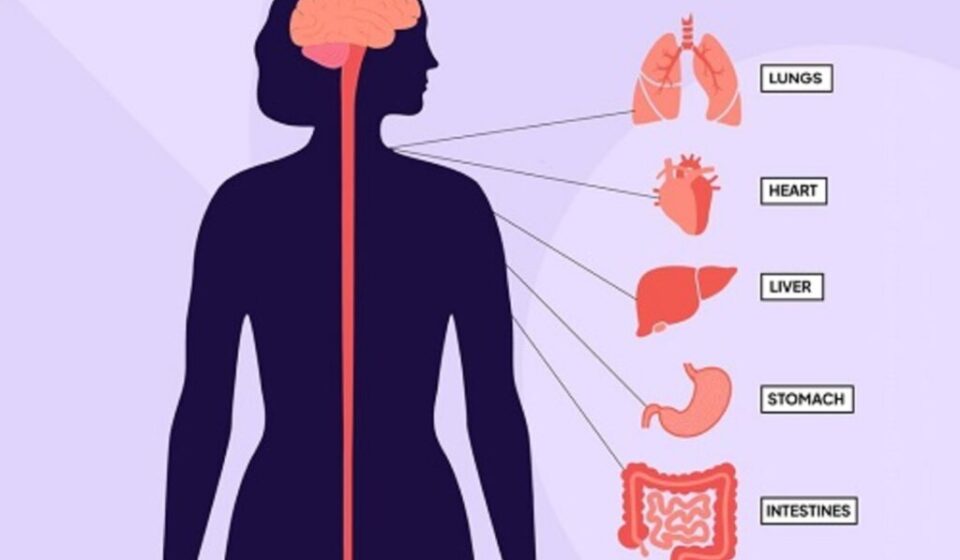
Enter the vagus nerve, Latin for "wandering," a name perfectly suited to its extensive journey throughout the body. Cranial nerve X, it is the longest and most complex of the cranial nerves, originating in the brainstem and branching out to almost every major organ below the neck: the heart, lungs, stomach, intestines, liver, spleen, kidneys, and even influencing our vocal cords, ears, and facial muscles.
The vagus nerve is the primary component of the parasympathetic nervous system, the other crucial branch of the ANS. While the sympathetic system acts as the accelerator, the parasympathetic system is the brake pedal. Its role is to induce the "rest and digest" state, promoting calm, healing, and restoration. And the vagus nerve is the chief conductor of this internal orchestra of tranquility.
Its functions are astonishingly diverse and deeply impactful on our overall well-being:
- Heart Rate Regulation: The vagus nerve slows heart rate and lowers blood pressure, bringing the body back to a state of calm after stress. A key indicator of its health is Heart Rate Variability (HRV) – the natural variation in time between heartbeats. High HRV signifies a robust, flexible nervous system, capable of adapting to stress and recovering quickly. Low HRV is often associated with chronic stress, anxiety, and various health issues. The vagus nerve is the primary driver of high HRV.
- Inflammation Control: The vagus nerve possesses powerful anti-inflammatory properties. It communicates with the immune system, instructing it to dampen inflammatory responses, which are often overactive in chronic stress and various diseases. This "inflammatory reflex" is a critical pathway for maintaining health.
- Digestion and Gut Health: The vagus nerve acts as the main communication highway between the brain and the gut, often referred to as the "gut-brain axis." It regulates digestive processes, nutrient absorption, and even influences the gut microbiome. A healthy vagal tone is crucial for optimal digestion and can mitigate conditions like IBS.
- Mood and Mental Health: By influencing neurotransmitters like serotonin and GABA (gamma-aminobutyric acid), the vagus nerve plays a significant role in mood regulation, reducing anxiety and depression. It’s so vital that vagus nerve stimulation is a recognized treatment for severe depression and epilepsy.
- Social Engagement and Connection: Dr. Stephen Porges’ groundbreaking Polyvagal Theory highlights the vagus nerve’s role in social bonding and safety. The "ventral vagal complex," a more recently evolved branch of the vagus, allows us to feel safe, connect with others, and experience empathy. When this system is activated, we can engage socially, rather than being stuck in fight, flight, or freeze.
- Breath Regulation: The vagus nerve is intricately linked to our breathing patterns, particularly slow, deep, diaphragmatic breathing, which in turn further stimulates the nerve itself, creating a virtuous cycle of calm.
The overarching concept that encapsulates the health and responsiveness of this incredible nerve is vagal tone. High vagal tone means your vagus nerve is functioning optimally. It signifies a nervous system that can efficiently switch from stress to relaxation, a body that recovers quickly, and a mind that maintains composure. It’s a marker of resilience, health, and well-being. Conversely, low vagal tone is associated with increased inflammation, anxiety, depression, and a diminished capacity to handle stress.
The good news? Vagal tone is not fixed. It can be actively cultivated and strengthened. And this is precisely where yoga shines as an unparalleled tool.
The Unrivaled Synergy: How Yoga Hacks the Vagus Nerve
Yoga, in its holistic essence, is not just a series of stretches or breathing exercises; it is a profound practice of self-regulation and self-awareness. It works on multiple levels to stimulate, strengthen, and optimize the function of the vagus nerve, making it the ultimate stress-hacker. Let’s break down its key components:
1. Pranayama (Breathwork): The Direct Vagal Activator
If there’s one direct, potent lever for vagal activation in yoga, it’s pranayama. The breath is the bridge between our conscious and unconscious mind, the voluntary and involuntary nervous systems. While our heart beats autonomously, we can consciously control our breath. This conscious control is the gateway to influencing the vagus nerve.