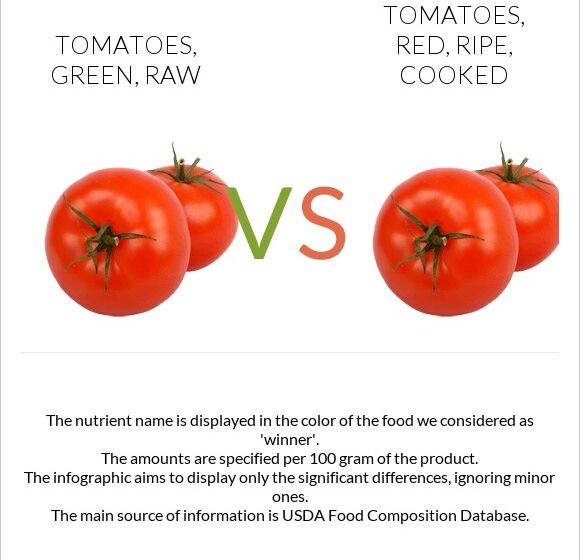

The Arena: A Culinary Colosseum
In the vibrant amphitheater of our kitchens and gardens, few protagonists command as much attention as the humble tomato. A fruit often masquerading as a vegetable, its journey from the "poison apple" of European lore to a global culinary staple is a testament to its irresistible charm and versatility. Yet, beneath its glossy skin and juicy flesh lies a silent, ongoing nutritional skirmish, one that has puzzled home cooks and scientists alike: the battle between green and red.
For millennia, the red tomato has reigned supreme, the undisputed champion of ripeness, sweetness, and perhaps, nutritional prowess. Its verdant counterpart, the green tomato, often relegated to the status of an unripe pretender or a quirky heirloom anomaly, has typically been seen as the underdog, less developed, less appealing, and potentially, less beneficial. But is this perception accurate? Does the vibrant crimson truly eclipse the verdant emerald in the arena of health benefits? Or does the story hold more twists and turns than a rambling tomato vine?
This isn’t merely a question of aesthetic preference or culinary application; it’s a deep dive into the intricate biochemistry that defines these two titans of the nightshade family. We will peel back the layers, examine the molecular warriors within each, and ultimately, attempt to declare a victor – or perhaps, discover that true triumph lies in diversity.
The Reigning Champion: The Red Tomato
Our story begins with the familiar hero: the ripe, red tomato. Its journey from a small green fruit to a blushing orb is a marvel of natural engineering, driven by a complex symphony of enzymatic reactions and genetic programming. This transformation isn’t just cosmetic; it’s a profound metabolic shift that redefines its nutritional profile.
The Crimson King: Lycopene
The most celebrated nutrient in the red tomato, and indeed, its defining characteristic, is lycopene. This powerful carotenoid pigment is responsible for the tomato’s iconic red hue. As the tomato ripens, chlorophyll (the green pigment) degrades, and the synthesis of carotenoids, particularly lycopene, accelerates dramatically.
- Antioxidant Powerhouse: Lycopene is a potent antioxidant, meaning it actively seeks out and neutralizes free radicals in the body. Free radicals are unstable molecules that can damage cells, contribute to chronic diseases like cancer and heart disease, and accelerate the aging process. Lycopene’s unique molecular structure makes it exceptionally effective at quenching these destructive agents.
- Cardiovascular Guardian: Research consistently links higher dietary intake of lycopene with improved cardiovascular health. It’s thought to help reduce LDL ("bad") cholesterol oxidation, improve endothelial function (the lining of blood vessels), and contribute to lower blood pressure.
- Cancer Combatant: Perhaps lycopene’s most lauded role is in cancer prevention, particularly prostate cancer. Studies suggest that men with higher lycopene levels have a reduced risk of developing this common cancer. While the exact mechanisms are still being fully elucidated, lycopene is believed to interfere with cancer cell growth, induce apoptosis (programmed cell death), and modulate cell signaling pathways.
- Skin Protector: Emerging research suggests lycopene may offer a degree of internal sun protection, helping to mitigate UV-induced skin damage. It doesn’t replace sunscreen, but it adds another layer of defense.
- Bioavailability Bonus: Here’s a crucial detail for our knowledgeable audience: lycopene is fat-soluble and its bioavailability is significantly enhanced when tomatoes are cooked and consumed with a source of fat (like olive oil). This is why tomato sauce, paste, and stewed tomatoes often deliver more readily absorbed lycopene than raw tomatoes. The heat breaks down cell walls, releasing the lycopene, and the fat aids in its absorption in the digestive tract.
Beyond Lycopene: The Red Tomato’s Supporting Cast
While lycopene takes center stage, the red tomato is far from a one-hit wonder. It boasts an impressive array of other vital nutrients:
- Vitamin C: A powerful antioxidant in its own right, crucial for immune function, collagen synthesis, and skin health. Ripe tomatoes are an excellent source.
- Vitamin A (Beta-carotene): Another carotenoid, which the body converts into Vitamin A, essential for vision, immune function, and skin health.
- Vitamin K: Important for blood clotting and bone health.
- Potassium: An electrolyte vital for maintaining fluid balance, nerve signals, and muscle contractions, including those of the heart.
- Folate (Vitamin B9): Essential for cell growth and function, particularly important during pregnancy.
- Other Phytochemicals: Red tomatoes contain a complex mixture of other beneficial compounds, including flavonoids (like naringenin and quercetin) and phenolic acids, which collectively contribute to their antioxidant and anti-inflammatory properties.
In essence, the red tomato is a nutritional powerhouse, a well-rounded contender whose vibrant color is a direct indicator of its rich bounty of health-promoting compounds, especially lycopene.
The Underdogs: The Green Tomatoes
Now, let’s turn our attention to the green contenders. This category, however, is not as monolithic as "red." We must differentiate between two distinct types of green tomatoes, each with its own unique nutritional narrative: the unripe red tomato and the genetically distinct, ripe green heirloom varieties.
Contender 1: The Unripe Red Tomato (The Young Upstart)